

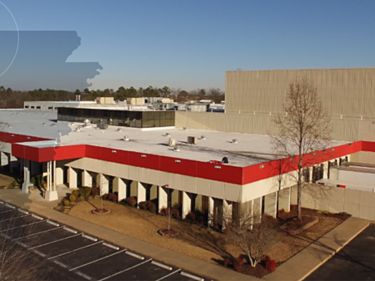
Employees at the Phillips Medisize, a Molex company, Little Rock, Arkansas, plant transformed more than just the physical facility when it shifted from making electronic connectors to medical and in vitro diagnostic products.
The world around us is rapidly changing. To meet that accelerating challenge, Koch, its businesses and its people need to continually transform and improve. That can take many forms, but often includes stopping unprofitable activity or doing things in entirely new ways.
That kind of thinking is what drove a years-long transformation of the Phillips Medisize Little Rock, Arkansas, facility. Starting around 2016, it transformed from a facility that produced electronic connectors for parent company Molex to what it is today: a state-of-the-art medical device and in vitro diagnostic test manufacturer.
Phillips Medisize, which is the Medical and Pharmaceutical Solutions division of Molex, is a global contract and manufacturing organization that engineers and produces products for pharmaceutical, medtech and in vitro diagnostic companies. In 2016, Molex acquired Phillips Medisize. Since then, it's been a growth engine for the company with its focus on the growing health care sector.
“Transformation is one of our core values,” says Derrick Felkins, the Phillips Medisize Little Rock plant manager. “Transformation is how we ensure we continuously improve the services we offer our customers. It makes us stronger because we challenge ourselves to do something that is not only different, but also meaningful to the customers we serve.”
For the plant to be viable long term, transformation is necessary. The Little Rock plant transformed by moving away from producing electronic connectors and shifting to work that would capitalize on the growing demand for U.S.-based medical products manufacturing.
While the vision for the transformation was clear, making that change would be a Herculean task.
Almost all the original equipment would need to be packed up and shipped out. New machines would need to be brought in. Moving to medical device manufacturing also meant changing the environment inside the facility, including building several new "clean rooms" — specially designed rooms with strict controls over the level of airborne particles and contaminants.
“There were very few pieces of machinery that did not move during this transition,” says Jonathan Juhl, the operations manager at the facility.
The quality team also went through a major transformation. Medical products, including devices and diagnostic test kits, require much higher quality standards and certifications than electronic connectors. To ensure that its facilities consistently meet the very high threshold for quality and regulatory in the medical sector, all 23 Phillips Medisize manufacturing facilities operate under one Quality Management System, known as MyQMS. The team had to implement new procedures from MyQMS, train employees on the changes and regulations, become ISO 13485 certified and register with the U.S. Food and Drug Administration.
The people at the facility also had to change their mindset regarding working with customers. Previously, they made connectors that were designed for Molex electronics customers across a variety of industries, from telecommunications to transportation. The shift to medical manufacturing meant they were now contract manufacturers making products for patients and medical professionals for whom the quality of the product would be vitally important. Likewise, their customers now encompassed renowned medical device and in vitro diagnostic companies, including a leading provider of cancer screening and diagnostic tests.
“We shifted from selling connector products to selling our manufacturing services,” Derrick says. “Selling our advanced manufacturing capabilities is all about selling our people, processes and technologies.”
As challenging as the physical and logistical changes were, Derrick says the biggest challenge was getting employees through the transition and helping them transform themselves.
Bryan Strickland is a senior quality engineer at the facility. He’s worked there for almost 34 years. His initial reaction to so much change was hesitation, but he says leadership did an excellent job of encouraging him to use the transition as an opportunity to grow.
“One of the great things about this company is that as long as you have a desire to grow and transform, it’s a safe place to learn and grow without being ridiculed for what you don’t know,” he says.
Derrick, the plant manager, says he and other leaders tried to be as transparent as possible and frequently communicated the vision and purpose of the change. He says it was important to find those who had the right mindset from the beginning and were willing to challenge themselves, learn and grow.
One of the people he identified was Shawna Long. She is currently the facility's quality systems coordinator, a position she was able to move into because of the site conversion.
“I’ve always embraced change,” she says.
The transformation pushed Shawna and others at the facility to really understand where their passions lie and how they can use that to create value.
“Putting yourself out there and trying something new can be the most uncomfortable thing in the world,” she says. “You go from knowing pretty much everything to knowing next to nothing, but you need to take that chance. You can learn.”
It hasn’t always been easy. There were plenty of challenges, setbacks and frustrations. But by transforming, the facility has adapted to the needs of the market with a long-term view of adding value for itself and its customers. After years of hard work, they’re starting to see the fruit of their labor. They've grown from one customer to now working with five.
“Molex and Phillips Medisize leadership challenged and empowered us with this opportunity,” Derrick says, “and every day, we are proving that they made the right investment as we deliver for our customers, as well as the patients and medical professionals who count on us.”